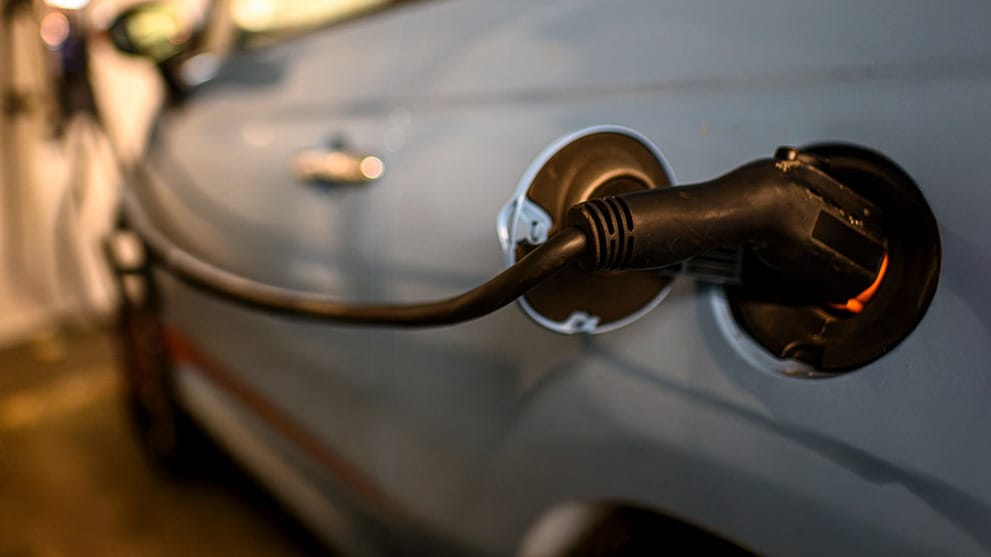
Eversource and National Grid have begun enrolling Massachusetts homeowners with bidirectional-capable electric vehicles into a new program that pays them to send stored battery power back to the electric grid during periods of peak demand.
The residential vehicle-to-grid pilot folds EVs into ConnectedSolutions, the two utilities’ existing demand-response platform, marking one of the first statewide efforts to treat parked cars as a dispatchable grid resource rather than just a source of new electric load.
How the pilot works
Eversource and National Grid are piloting a residential vehicle-to-grid (V2G) program in Massachusetts, a state with more than 150,000 EVs on the road, letting qualifying customers enroll bidirectional-capable EVs in the utilities’ ConnectedSolutions demand-response program.
The effort was announced on July 23 by Eversource, National Grid and their technology partners.
Participating EVs can play an important role in reducing costs for all Eversource and National Grid customers. During periods of peak demand, they will be able to send stored energy back to the grid, helping prevent system strain, while enhancing overall grid stability. The grid benefits that V2G-capable EVs can provide are potentially substantial, and participating drivers will be rewarded with incentives that support the value they deliver to the grid.
The two utilities are working with distributed energy resource management system (DERMS) platform provider EnergyHub, Sunrun’s grid services division, and V2G platform provider The Mobility House to incorporate V2G into the ConnectedSolutions virtual power plant (VPP) initiative.
What drivers can earn
The financial incentive is tied to how much power a vehicle contributes during the hottest, highest-demand stretches of the year.
Compensation for enrolling a vehicle in ConnectedSolutions is $275 per kilowatt (kW) for the vehicle’s average contribution during summer events, the same statewide rate utilities pay for enrolled home batteries. For a typical battery capable of a 5-kW continuous contribution, the Mass Save sponsor pays $275 per kilowatt (kW) for the average contribution during summer events, which for a typical 5-kW continuous contribution could mean up to $1,375 per year of participation. Actual EV payouts will depend on battery capacity, vehicle availability and performance during dispatch events.
When energy consumption is highest, typically during the hottest days of the year, the electric grid becomes stressed. This is referred to as ‘peak demand,’ which leads to higher energy bills and worse pollution as electricity suppliers turn to dirtier and more expensive fossil fuel plants to keep up with the energy demand during that period. To address this, utilities operate ConnectedSolutions, a demand response program to help reduce strain on the electric grid during peak hours.
Folding EV batteries into that same mechanism gives utilities another lever besides a bidirectional charging pilot already running in California and conventional batteries or thermostats.
Built on existing fleet work
The residential rollout did not start from scratch. It follows fleet-side V2G work already underway in the state.
National Grid is also currently leveraging V2G for light-to-medium-duty fleets within ConnectedSolutions, beginning with school buses, while Eversource is in discussions with districts as part of its ConnectedSolutions+ offering.
The push comes alongside a broader expansion of demand-response options in the state. A Greater Boston pilot and a companion program in southeastern Massachusetts recruit eligible stationary batteries, electric vehicles and smart devices in areas where Eversource expects above-average summer loading, encouraging customers to shift charging to off-peak or midday solar-rich hours.
Regulators have signed off on part of that expansion. According to a Massachusetts Department of Public Utilities presentation, the DPU approved a residential managed charging program after Eversource proposed to implement it with passive and active components, funding it through a reallocation from its residential segment budget , according to the DPU presentation.
The DPU separately considered a new bidirectional charger incentive pilot that Eversource had proposed, covering 25 bidirectional chargers for medium- and heavy-duty fleet customers, primarily at school bus sites, with a $500,000 associated budget.
Why it matters for the grid
Massachusetts utilities are betting that EV batteries sitting idle in driveways can substitute for costlier grid upgrades as electrification accelerates.
Eversource and National Grid are testing solutions to respond to trends that energy system modelers expect to reshape New England’s grid in the coming years, including a dramatic increase in electricity demand driven by electrification of buildings and transportation, alongside a policy-driven surge in small-scale solar additions.
That strategy mirrors broader national findings about managing charging loads rather than just expanding wires and transformers, a theme also explored in PG&E’s flexible connections approach for new EV chargers.
For now, the Massachusetts program remains a pilot, with utilities and their technology partners tracking how many bidirectional-capable vehicles actually enroll and how reliably owners allow their cars to discharge when summer demand spikes hit.
