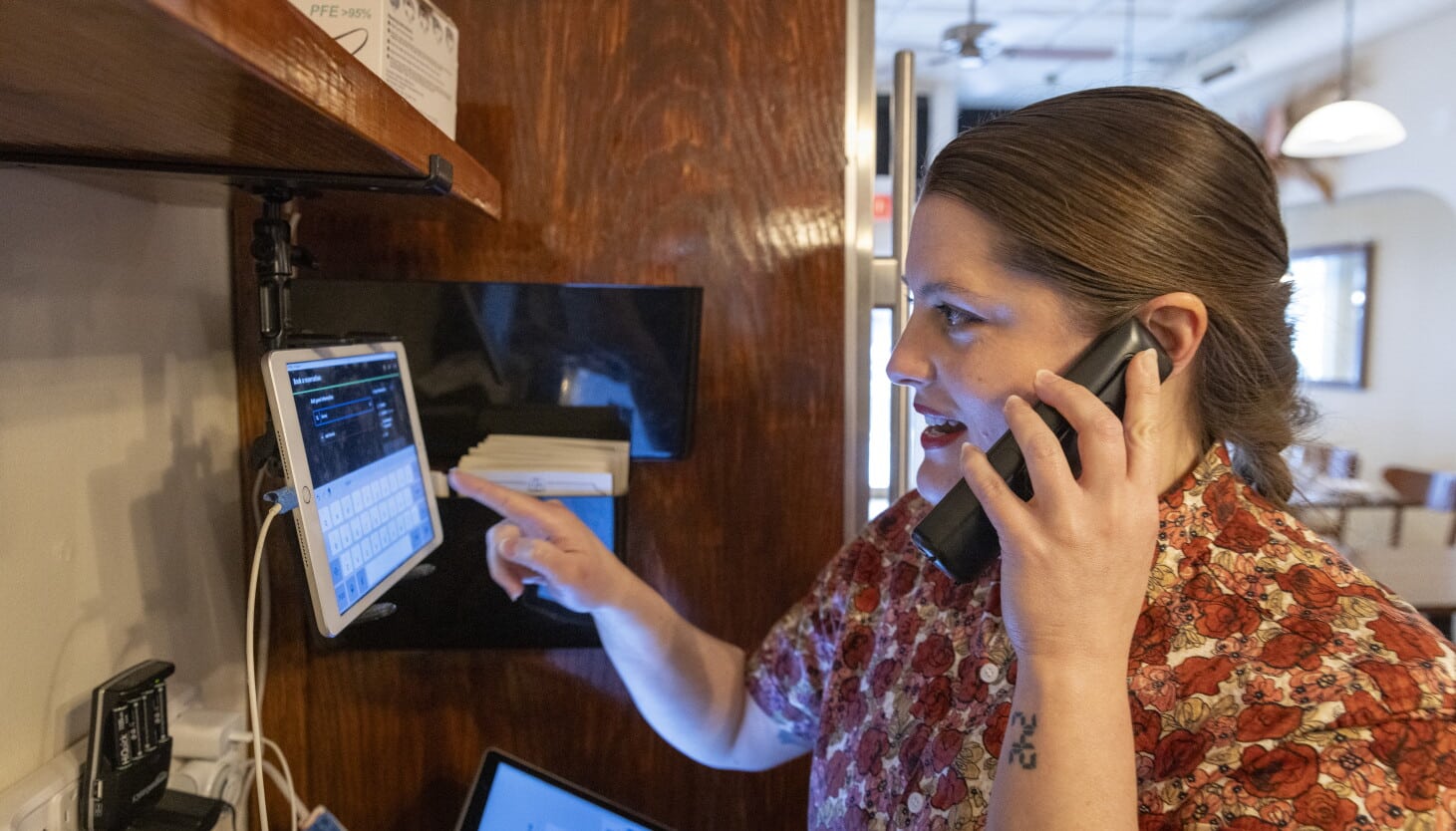
Restaurants across the United States and Europe are increasingly requiring deposits or card holds to secure a reservation, as new industry data confirms that empty tables booked in advance remain a persistent drain on revenue.
A reservation analytics platform’s newly released index, built from millions of bookings, shows the practice of charging diners for no-shows is becoming more common as operators look for ways to protect revenue.
What the data shows
The Resos No-Show Index, built from 3,768,761 reservations across 2,417 restaurants between August 2025 and July 2026, puts the recorded no-show rate at 2.33% .
That figure comes from 87,953 recorded no-shows between August 2025 and July 2026, representing 283,728 booked covers that never arrived.
The report notes that this recorded figure likely understates the real scope of the problem. No-shows must be staff-recorded to appear in the index. Separately, the index tracks late cancellations: no-shows are only the visible half, as of 566,049 cancellations in the dataset, 317,541, or 56%, were cancelled within 24 hours of the booking or after it had started .
Certain bookings are more likely to go unhonored than others. The no-show rate at dinner (2.63%) runs 43% higher than at lunch (1.84%). Monday is the worst day (2.69%), Wednesday the best (2.09%) , and January is the worst month (2.62%), August the best (2.14%); new-year resolutions apparently do not extend to honoring reservations. The rate is also higher on small tables, at 2.63% for parties of one or two .
Large parties, meanwhile, present a different kind of risk. Large parties don’t fail often, but when they do, the damage is disproportionate: in the index, parties of 10 or more no-show at just 1.15%, well below the overall rate, but each one that fails takes an average of 13.4 covers with it.
Deposits cut the problem sharply
The index found that financial commitment is associated with different diner behavior. Reservations with no-show protection, a deposit or card hold, recorded a 0.80% no-show rate versus 2.47% without it . Resos itself cautions that deposits and no-show fees protect exposed services, but are not a proven fix, and the company publishes no figure for how much they change guest behavior , since the comparison reflects an observed association among restaurants and bookings that used the feature rather than a controlled test.
That gap is wide enough that more operators are now building the requirement into their booking flow for the riskiest shifts and party sizes rather than reserving it for special occasions.
Reminders help too, though less dramatically. Reservations with a delivered SMS reminder showed a 16% lower recorded no-show rate than reservations at the same restaurants without one, based on 46,884 exposed reservations at 257 restaurants that had reservations both with and without a delivered reminder. That figure, too, reflects an observed association, not a controlled experiment, so it does not show that the reminder caused the difference .
Separate consumer research suggests diners are growing comfortable with the tradeoff. A 2024 ResDiary report on the UK market found 62% of diners reported being willing to provide card details when booking, indicating a growing acceptance of this approach to deter no-shows , a shift from the resistance operators once expected when the practice was rare.
Why restaurants are pushing the change
For operators working on thin margins, a single no-show is not a minor inconvenience. Industry estimates suggest the cost of a single no-show can run from roughly $35 to $60 for a casual restaurant up to $150 to $300 in fine dining, depending on check size and whether the table could have turned again.
Restaurants with fixed seating and advance prep work, including tasting menu and fine dining formats, are especially exposed since those seats are harder to resell on short notice. The ingredients were already ordered against a projected cover count, the staffing was set days earlier, and in a tasting-menu kitchen, some of the prep for that specific table is already done and cannot be sold to anyone else.
The shift mirrors how other consumer-facing industries have responded to similar friction. This is not unlike the psychology behind the checkout prompts that have reshaped tipping norms, where small defaults nudge customer behavior at the point of commitment.
It also reflects a broader pattern in which Americans are reassessing discretionary spending habits, a trend documented in research showing most Americans have cut spending on extras over the past year.
What it means for diners
For everyday diners, the practical upshot is that booking a table, especially for popular restaurants, weekend evenings or holiday dates, is more likely to involve providing a card number upfront. OpenTable, one of the largest reservation platforms, has reported that deposits cut no-show rates by 57% on average and make guests 72% less likely to cancel at the last minute.
The index notes that even light-touch interventions, such as a confirmation text, make a measurable dent without asking diners to commit money at all, though the effect is smaller than a deposit requirement.
As the data accumulates, deposits and card holds appear set to keep spreading from fine dining into mainstream casual bookings, marking a quiet but lasting change in how Americans reserve a seat at the table. More detail on the methodology and full breakdown of figures is available in the Resos No-Show Index.
