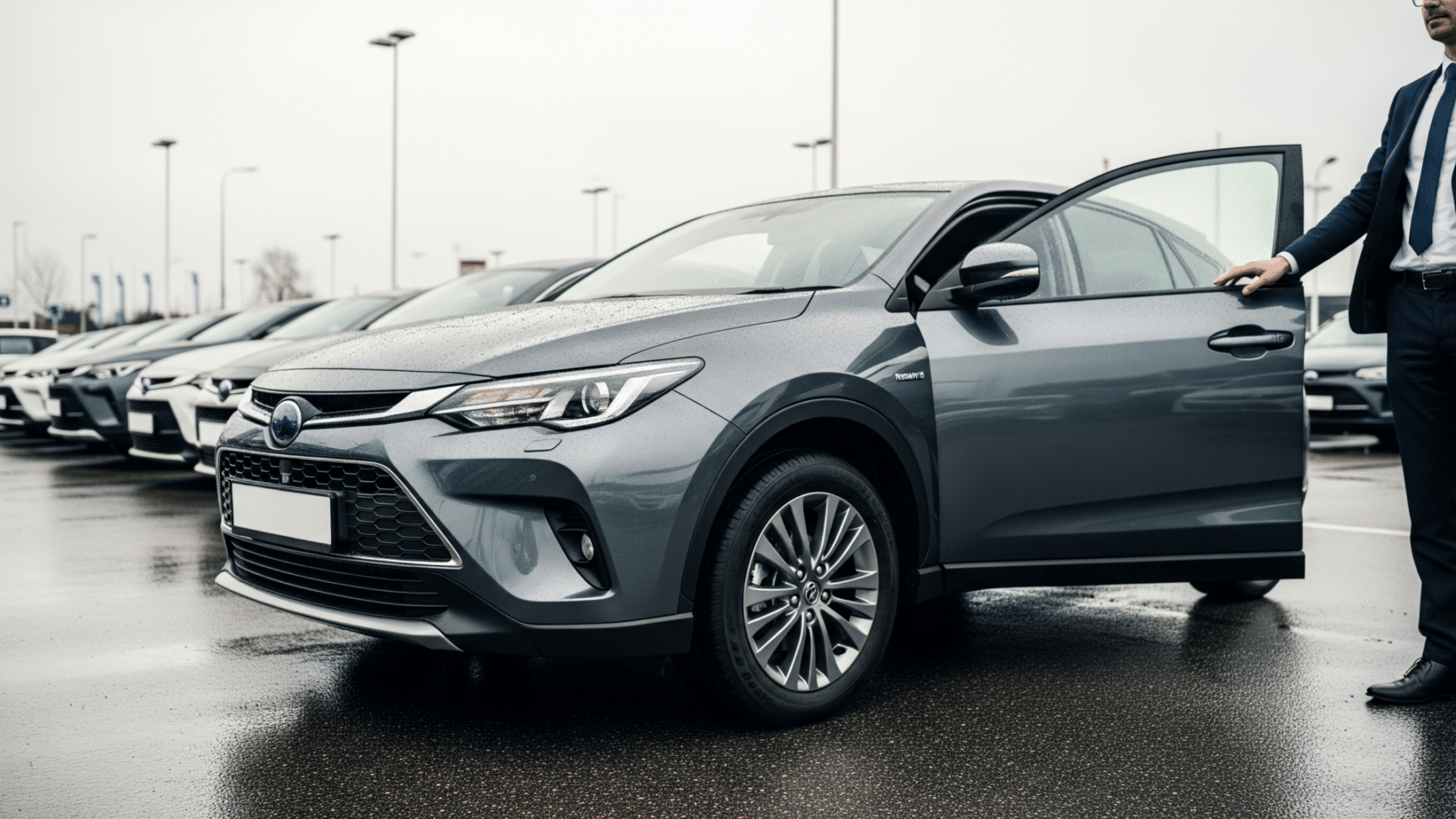
Something quiet is happening on American dealer lots, and it has nothing to do with a splashy Super Bowl ad or a celebrity endorsement.
It is happening model by model, sale by sale, and it is building toward what could be the biggest shake-up in U.S. automotive history in nearly a century.
The SUV that once sold with a gas engine is now a different machine entirely
Toyota announced the 2026 RAV4 will be offered only as a hybrid or plug-in hybrid, eliminating a traditional gas engine in the vehicle for the first time.
That is not a small footnote. The RAV4 closed out 2025 as the best-selling non-pickup vehicle in the United States, with 479,288 units sold. For the last few years, the Toyota RAV4 has been the best-selling vehicle in the U.S. that isn’t a pickup.
The 2026 RAV4 is an all-new sixth-generation model built on Toyota’s TNGA-K platform, and it moves to a fully electrified lineup of hybrid and plug-in hybrid powertrains, dropping the previous gas-only base engine.
The standard hybrid delivers more power than the discontinued gas-only model, with 226 horsepower for front-wheel drive and 236 horsepower for all-wheel drive. Now in its sixth generation, the 2026 RAV4 is designed around hybrid power from the ground up, boasting more power, better fuel economy, and an expected price adjustment.
Every single buyer who walks in and asks for a RAV4 walks out with a hybrid powertrain, whether they planned to or not.
The sales numbers behind this model launch tell a story that is hard to ignore
The RAV4 is the best-selling vehicle in the United States that is not a pickup truck, and it set its all-time annual record in 2025 at 479,288 units.
Toyota Motor North America posted 2,518,071 total U.S. sales in 2025, an 8.0% increase over the prior year.
With gas prices still elevated and sticker prices near record highs, shoppers are doing the math on fuel costs and landing in the hybrid lane faster than most forecasters expected.
Cox Automotive forecasts Toyota’s U.S. sales (Toyota and Lexus combined) reaching approximately 1.25 million vehicles in the first half of 2026. Despite ongoing economic volatility, consumer demand has remained somewhat stable, though high interest rates, inflation, and tightening budgets continue to limit overall purchasing power.
EV sales are under pressure industrywide, while electrified vehicles, mostly hybrids, are quickly becoming the dominant choice on dealer lots, now making up more than half of Toyota’s monthly sales volume.
One automaker is watching its lead shrink with almost nothing to throw back
For decades, the order at the top of the U.S. market has been fixed and predictable.
General Motors remained the largest automaker in the United States through the second quarter of 2026, but its top spot is under pressure. The company sold 714,896 vehicles during the quarter, down 4.2% year over year, while first-half sales declined 6.8% to 1,341,325 units as the broader U.S. auto market contracted by about 3%.
While GM is expected to remain the top-selling automaker in the United States through the first half of 2026, a Cox Automotive forecast shows Toyota (including both the Toyota and Lexus brands) on track for approximately 1,245,672 vehicles, leaving just over 83,000 units separating the two automakers.
That surge has narrowed the gap with GM to fewer than 100,000 units, setting up a potential shift in leadership by year-end if trends hold.
In a market running at roughly 16 million vehicles annually, that margin is statistical noise.
The real reason GM is exposed comes down to a single product decision made years ago
GM had held the top U.S. sales spot since 1931, when it overtook Ford, stumbling only once, briefly, in 2021 when the global chip shortage kneecapped its production and handed Toyota a fleeting moment at the top.
The current pressure underscores the consequences of GM’s bet on EVs over hybrids, as most American buyers have been reluctant to go all-electric.
GM sales in Q2 reflected the smaller EV market, discontinued vehicles, and some inventory constraints. While rivals stocked dealer lots with hybrids buyers wanted, GM’s passenger-car hybrid offerings remained extremely limited, with the Corvette E-Ray standing as the brand’s sole conventional hybrid model, while Cadillac and other GM brands expanded their EV lineups instead.
GM chose to forgo a broad hybrid portfolio that competitors were selling briskly, and bet that consumers would follow regulatory mandates and corporate enthusiasm rather than their own preferences. Cadillac recorded the steepest decline among GM’s brands, with sales falling 19.2% in the second quarter. Those choices are now showing up in the sales data.
The consequence is arriving in the market-share figures. Toyota is expected to command 15.8% of the U.S. market in the first half of 2026, while GM’s share slips to 16.8%, according to Cox Automotive.
The 2026 RAV4, now exclusively electrified per Toyota Motor North America’s official announcement, joins a growing roster of Toyota models that have dropped the gas-only option entirely.
GM now plans to reintroduce plug-in hybrids in North America, a U-turn that confirms the company knows exactly what it missed.
Meanwhile, Ford also faces risk of losing its No. 3 spot to South Korea’s Hyundai Motor, which offers several hybrids, a storyline worth watching as hybrid share keeps climbing.
What a hybrid-only SUV launch means for every buyer shopping this fall
Toyota’s entire 2026 RAV4 lineup is now hybrid only, from the perennial Camry to the Corolla Cross, Highlander, and beyond, a breadth of electrified inventory that competitors cannot close quickly.
That breadth of inventory is the structural advantage competitors cannot replicate quickly.
The clear winners in the current market are hybrids: with gasoline prices elevated, and many buyers still reluctant to commit to a full electric vehicle, gasoline-electric models are hitting the sweet spot.
GM’s hybrid comeback is at least a full model year away. Toyota’s hybrid-only RAV4 is on dealer lots right now.
General Motors has ruled American car sales since 1931, and for nearly a century the Detroit giant has held the top spot as the best-selling automaker on its home soil. That 95-year reign has never looked more fragile, and the machine doing the most to end it is a family SUV that most buyers simply wanted for the commute.
