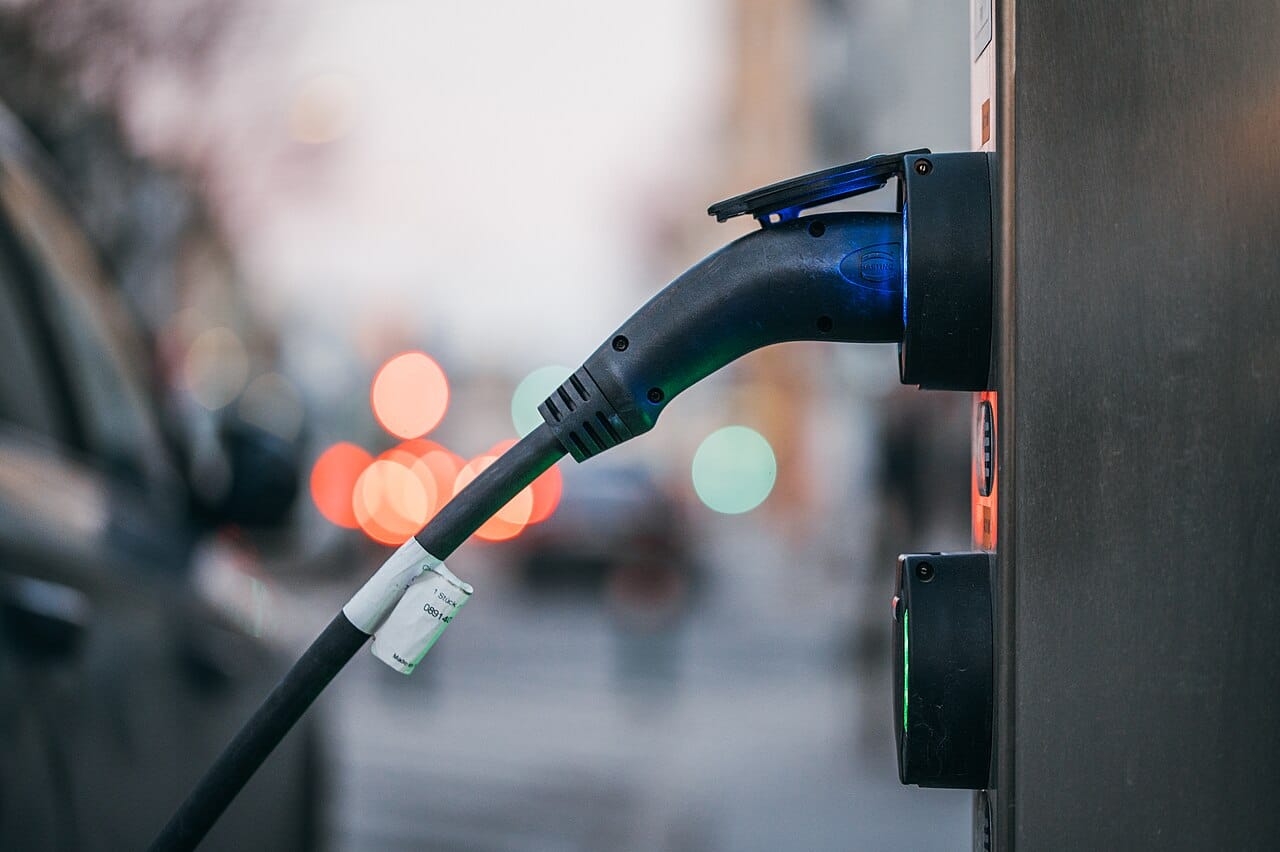
A driver plugs in after dinner and walks away without touching a single setting.
Hours later, long after the house has gone quiet, the car starts pulling power on its own.
No app reminder, no alarm set for 1 a.m., no willpower required.
That quiet handoff from habit to automation is exactly what a new batch of real world data was built to measure, and it is reshaping how utilities think about electric vehicle charging altogether.
How the software decides when your car actually charges
The mechanism is simpler than it sounds. Instead of asking a driver to remember a cheap rate window, a managed charging system plugged into the vehicle or the charger reads the local utility’s price signal and the grid’s real time condition, then delays or throttles the session on its own.
The driver sets only a target, like a full battery by 7 a.m., and the software fills in the rest.
That shift from asking people to act to letting a system act for them turns out to be the whole game. Time of use rates alone depend on a driver remembering to wait, and most people simply plug in the moment they get home from work, right when the grid is often under its own strain. Automated control removes that human timing gap entirely, turning the car into a small flexible grid battery that an operator can schedule around everything else happening on the wires that night.
Inside a Washington driveway where nothing has to be remembered
Picture that same driveway at midnight. The porch light is off, the street is still, and inside the car’s battery pack the current has just quietly switched on without anyone lifting a finger.
That is the scene utilities are now betting on at scale, not a single clever household but a model for thousands of ordinary garages behaving the same way on autopilot. The point of building software this way is not to make drivers smarter about rate schedules, it is to make the decision disappear entirely.
Because once the decision disappears, the timing problem stops being a behavior question and becomes a pure engineering one, solved once in software and repeated every night without fail.
Inside the trial that put a number on the shift
The clearest real world test of that idea came from a Washington state dataset built from actual driver data rather than simulations. A report from The Brattle Group, an economics and energy consultancy, was prepared for EnergyHub, a managed-charging technology developer, and used real-world data from a cohort of 58 drivers in an EnergyHub program in Washington state to demonstrate the approach’s potential for both utilities and drivers. The program handled complicated time of use schedules behind the scenes so no driver had to track them.
The result was stark, even from that modest sample. The trial showed active management can deliver 95 percent of charging off-peak, handling complex time-of-use rate schedules and substantially reducing a driver’s EV charging bill compared to a flat residential rate.
That is a near total migration of load away from the hours when the grid is most stressed, among the drivers studied.
And the savings were not small change either. The full Brattle Group report found that active managed EV charging shifts 95% of load off peak, saves drivers up to $400 a year and cuts grid upgrade costs by up to $180 per EV, lowering bills for all ratepayers. Those avoided upgrade costs matter because every EV added to a neighborhood circuit can eventually force a utility to replace a transformer. The study was commissioned by a vendor with a stake in the technology, so the figures describe what the approach can do under favorable conditions rather than a guarantee for every utility territory.
Why utilities are walking away from flat pricing and cash incentives
None of this happened in a vacuum. Utilities have spent years testing whether a flat monthly check or a modest off peak discount was enough to change driver behavior, and the early answer kept coming back disappointing.
A California utility pilot found that paying drivers up to $40 a month to hand over control barely moved the needle: only about 1.0% of households enrolled in managed charging at a $0 incentive, and at $40 per month, only 4.6% of households chose to enroll.
That gap is the real shift behind this story. A check in the mail requires a driver to opt in and trust the program; software embedded in the charger or the car acts without requiring any ongoing decision at all.
Pricing itself has moved sharply to reflect that lesson. San Diego Gas & Electric’s revised EV-TOU-5 plan, effective August 1, 2026, prices super-off-peak electricity at 13.1 cents per kilowatt-hour and on-peak power at 80.2 cents per kilowatt-hour. A spread that wide only pays off for the grid if software, not memory, is doing the switching.
Where the approach still runs into limits
Even so, automated charging is not a universal fix. It depends on a driver’s car, charger and utility all speaking the same software language, and plenty of older chargers and older EV models still lack that two way communication entirely.
A driver with a basic cord in an older garage gets none of this benefit no matter how good the utility’s program is.
There is also a grid side limit. Shifting charging later into the night avoids the early evening peak, but if enough vehicles in one neighborhood all get scheduled for the exact same cheap hour, a new smaller peak can form right at that boundary.
And record grid peaks this past summer across major US grid operators, with three of the largest power grids in the United States setting all-time records for peak electricity demand, are a reminder that total demand keeps climbing even as individual habits get smarter. The economics still rest on the utility actually passing savings through, something that varies state by state.
What this means for the next wave of EV owners
Taken together, the Washington trial suggests the industry’s old approach, essentially begging drivers to remember a bargain hour, is being replaced by systems that never ask in the first place.
That is a meaningful change in strategy, not just a new gadget. For an ordinary driver, the lesson is simple: a car that charges itself at the cheapest, least stressful hour can save real money without changing a single habit.
Utilities still have work ahead getting more chargers and vehicles capable of this coordination, and regulators still have to keep approving the price signals that make it worthwhile. But the direction looks clear.
