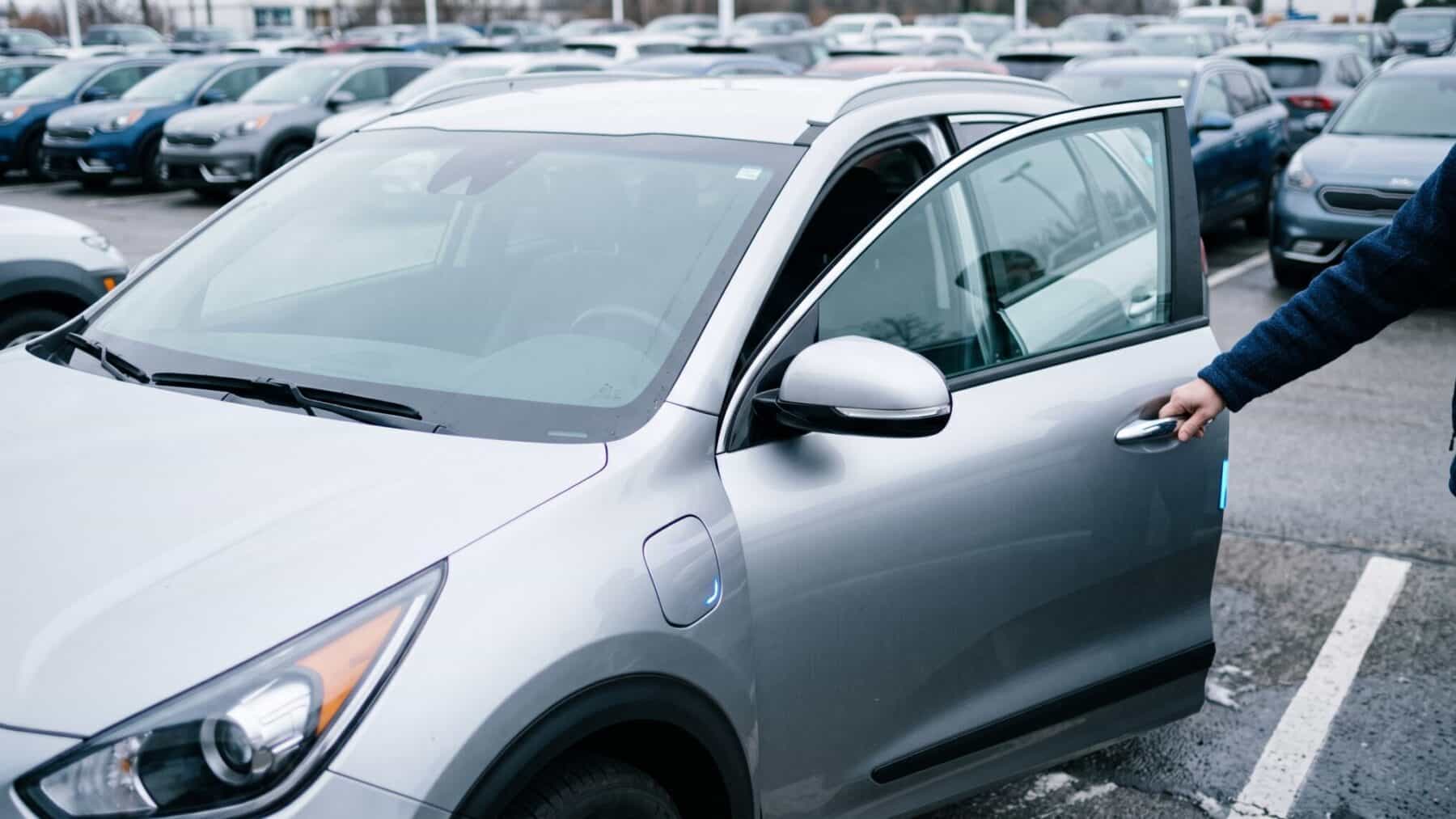
Walk any large US dealership lot right now and something has shifted in the inventory mix.
The crossovers wearing small hybrid badges have multiplied. The all-electric section has not grown the way anyone predicted. Two nameplates that were absent from the gas-electric conversation eighteen months ago are now outselling legacy players who staked everything on batteries.
And the numbers behind that change are bigger than most buyers realize. What made this happen so fast is almost entirely mechanical.
How a powertrain once called a stopgap became the mainstream choice
The hybrid drivetrain pairs a conventional gasoline engine with an electric motor and a small battery pack that charges itself through regenerative braking, never through a wall plug. No charging infrastructure, no range anxiety, no new routines. The car simply burns less fuel and costs less to run.
That frictionless pitch is exactly what separates it from both a pure gasoline vehicle and a battery-electric one. In some cases, nameplates that once offered traditional gasoline powertrains are now available exclusively as hybrids, helping drive continued growth in the segment. When a top-selling model disappears from the gas-only shelf, its buyers follow the vehicle into hybrid territory, and the segment’s share rises almost automatically.
That structural push, layered on genuine consumer preference, is what makes the current numbers so durable. “Hybrids are having their moment and are moving into the mainstream,” said Stephanie Valdez Streaty, Cox Automotive’s director of industry insights. According to Cox Automotive, all other propulsion systems have lost market share year to date.
What the US lot looks like when every segment is counted
According to Cox Automotive, hybrid vehicle volume increased 23 percent from Q2 last year to Q2 this year, pushing hybrid share to a record 16.3 percent, up from 13.0 percent a year ago. That is the highest hybrid share ever recorded at the midpoint of a calendar year.
Meanwhile, EV sales accounted for approximately 5.8 percent of total new-vehicle volume in the second quarter, well below the record 10.6 percent share achieved in the third quarter of 2025 when buyers rushed to take advantage of expiring government incentives.
Toyota remains the clear hybrid market leader, accounting for 44 percent of hybrid registrations. Toyota’s share has declined more than four percentage points over the past year, while Ford has fallen from nearly 10 percent to 6 percent. The brands that invested early and consistently in gas-electric technology are now seeing their lead narrowed by fast-moving rivals.
The hard evidence behind the surge, and where the numbers come from
Toyota sold the largest volume of any single automaker’s hybrids through the first half of this year across its two brands, controlling roughly 44 percent of the hybrid segment through Q2 of 2026. But the sharper story is happening at the brands that arrived late or scaled fast.
Kia’s share of the hybrid market reached 9 percent, with a massive 130 percent year-over-year hybrid growth. Kia posted the largest year-over-year gain, adding roughly 36,000 hybrid registrations. The all-new 2027 Telluride Hybrid began production at the Kia Georgia plant in West Point, adding further momentum to the brand’s hybrid lineup and raising the potential for continued growth.
Subaru was behind Kia in terms of market share, with just 4 percent, but it saw even more proportional growth, with a 140 percent year-over-year improvement, coming from a low base, as Subaru had zero hybrids in 2024.
Kia posted the largest year-over-year gain, adding roughly 36,000 hybrid registrations, while Hyundai added another 30,000. Together, they added more than twice as many hybrid registrations as Toyota, which gained roughly 32,000. That is the number that signals a genuine redistribution of market power.
Where the strategy does not hold and who is paying the price
General Motors, which offers a broad EV lineup but only one hybrid, a low-volume Corvette, reported a 4.2 percent decline in second-quarter sales. That single model is the 655-horsepower Chevrolet Corvette E-Ray, starting above $108,000, not exactly a practical choice for most buyers. It moves no volume in the mainstream segments where hybrids are actually winning.
Even within the winning segment, spoils are redistributing. The brands that held double-digit hybrid share by default, because nobody else was in the game, are now defending turf. And three-year trial data on subscription driver-assistance features suggests most owners let the technology lapse rather than pay to keep it, so those features are not compensating for a missing hybrid lineup.
GM is the top-selling automaker in the US, but Toyota is closing the gap. “At these rates, and what we’re seeing right now in the selling rates, GM may be looking over their shoulder here when we get to the year’s end, that Toyota could potentially overtake them as the top selling manufacturer here in the US market,” said Charlie Chesbrough, senior economist and senior director of industry insights at Cox Automotive. A shake-up now would underscore the cost of betting on EVs over hybrids while most American buyers remained reluctant to go all-electric.
What the shift means for buyers and what is still unresolved
For anyone shopping today, the practical consequence is clear: more hybrid models exist across more price points than at any earlier period. In 2023, hybrids made up around 5 percent of the market share, growing to 13 percent in mid-2025 before jumping another 3.3 percentage points this year.
The complication is supply. Many automakers focused investment on battery-electric vehicles instead of hybrids, so shoppers searching for hybrid trims in popular segments are still routinely finding short inventory and limited dealer discounts. Factories take time to retool, and Kia’s Telluride and Subaru’s Forester additions show the gap only beginning to close.
There is also the longer question of used-vehicle value. As hybrids age out of their first ownership cycle, residuals will need to hold. With off-lease electric vehicles already softening wholesale prices across the used market, any erosion of hybrid resale values could blunt the financial argument driving so many buyers today.
Whether that hardens into a decade-long plateau or eventually yields to a fully electric majority is the question the industry is still answering in real time.
