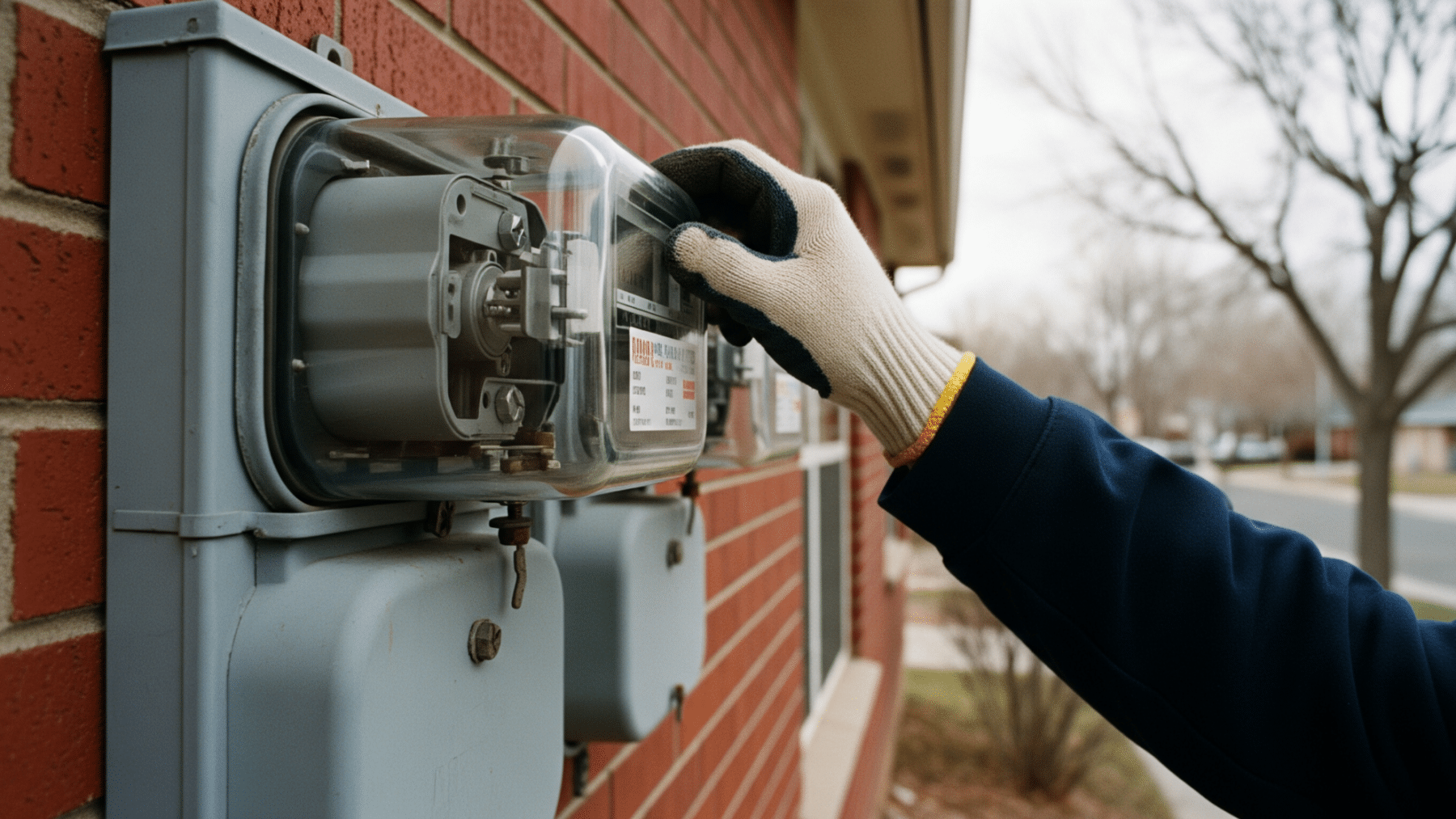
Every month, the electric bill shows up and most people glance at the total, maybe wince, and move on.
In Colorado right now, that monthly ritual sits at the center of the biggest utility fight the state has seen in years, and almost nobody outside the commission room knows it is happening.
The most ordinary-looking charge on your monthly statement
The average Colorado household pays around $104 to $110 a month for electricity, a number that blends into a budget alongside groceries and car payments without drawing much attention.
Utility bills feel fixed, almost like gravity.
But they are not fixed at all.
Behind every residential electric bill is a formal legal proceeding that can take 6 to 18 months, involve dozens of lawyers and expert witnesses, and ultimately set the exact price a household pays for years to come.
Utilities cannot raise prices on their own. They must file an application with their state’s Public Utility Commission, provide detailed financial justification, and go through months of review before any change takes effect.
Why the rate-case pipeline is unusually full right now
The number of rate cases working through state commissions in 2026 is striking.
A record $9.2 billion in rate increase requests was filed during the second quarter of 2026 alone, surpassing the Q2 2025 total, the previous second-quarter record, by 26 percent.
That wave is landing in commission rooms from Maryland to Arizona, affecting tens of millions of customer accounts.
Colorado’s own commission, already busy with a pattern of large utility filings that has been building across the country, is now handling two major cases at once.
On June 12, 2026, Black Hills Corp. filed a separate request seeking approximately $26.7 million in additional annual revenue from its Colorado electric customers.
The utility math that produces a number on your bill
To understand where the $6 comes from, you have to understand the thing regulators call a rate base.
A utility’s rate base is the total value of the assets, power plants, poles, wires, substations, that regulators allow the company to earn a regulated profit on.
Colorado’s largest electric utility originally filed its rate case citing a projected 2025 test-year rate base of $13 billion.
That pile of infrastructure is what ultimately drives the monthly charge on your statement.
Regulators set a return on equity, a permitted profit rate, and the math flows directly onto every customer’s bill.
The original ask from the utility was steep, and even the settlement that emerged from months of negotiations still drew fierce opposition from consumer advocates who scrutinize exactly these allowed profit rates in commission proceedings across the country.
The number that just broke a decades-long record in Colorado
Here is what Colorado’s Public Utilities Commission is actually weighing.
In November, Xcel Energy filed the rate case seeking to raise its base rate by a total of $355 million, with $327 million in new revenue from customers.
After months of negotiations, a settlement was struck and submitted to the commission on June 2.
Xcel Energy is now proposing a $225 million electric rate increase in Colorado, the largest the state has ever seen, with the support of its largest corporate customers and the electrical workers union.
Consumer advocates, who have tracked rate cases in the state for years, describe the $225 million settlement as the highest net base rate increase Colorado has ever recorded.
As proposed, the settlement would translate to an estimated 5.86% increase for residential customers, or $6.13 per month, bringing the average household bill to $110.81.
Consumer advocates are not satisfied with the reduced number.
“What it looks like to us is that the company, PUC staff and corporate interests have made an agreement that saddles residential customers with the largest rate increase in Colorado history,” said Joseph Pereira, director of the Colorado Office of the Utility Consumer Advocate.
The settlement is opposed by AARP, the Colorado Office of Utility Consumer Advocate, and the City of Boulder.
What the commission decides next will follow your bill for years
Rate cases are not a one-time event.
Whatever Colorado’s PUC approves becomes the baseline rate structure that households pay against for the life of the rate plan.
The settlement also includes a performance framework for the Comanche Unit 3 coal facility through 2029, along with continued existing trackers. A CPUC decision and implementation of final rates is anticipated in the third quarter of 2026.
The settlement sets a revised return on equity of 9.3% and an equity ratio of 54.5%, the two numbers that will define what Coloradans pay for power long after the headlines move on.
Meanwhile, the broader national picture suggests Colorado is not alone.
Utilities requested $18.6 billion in rate increases during the first half of 2026, affecting tens of millions of customer accounts nationwide.
The $6 on next year’s Colorado bill is ordinary-looking on purpose. The proceeding behind it is anything but.
