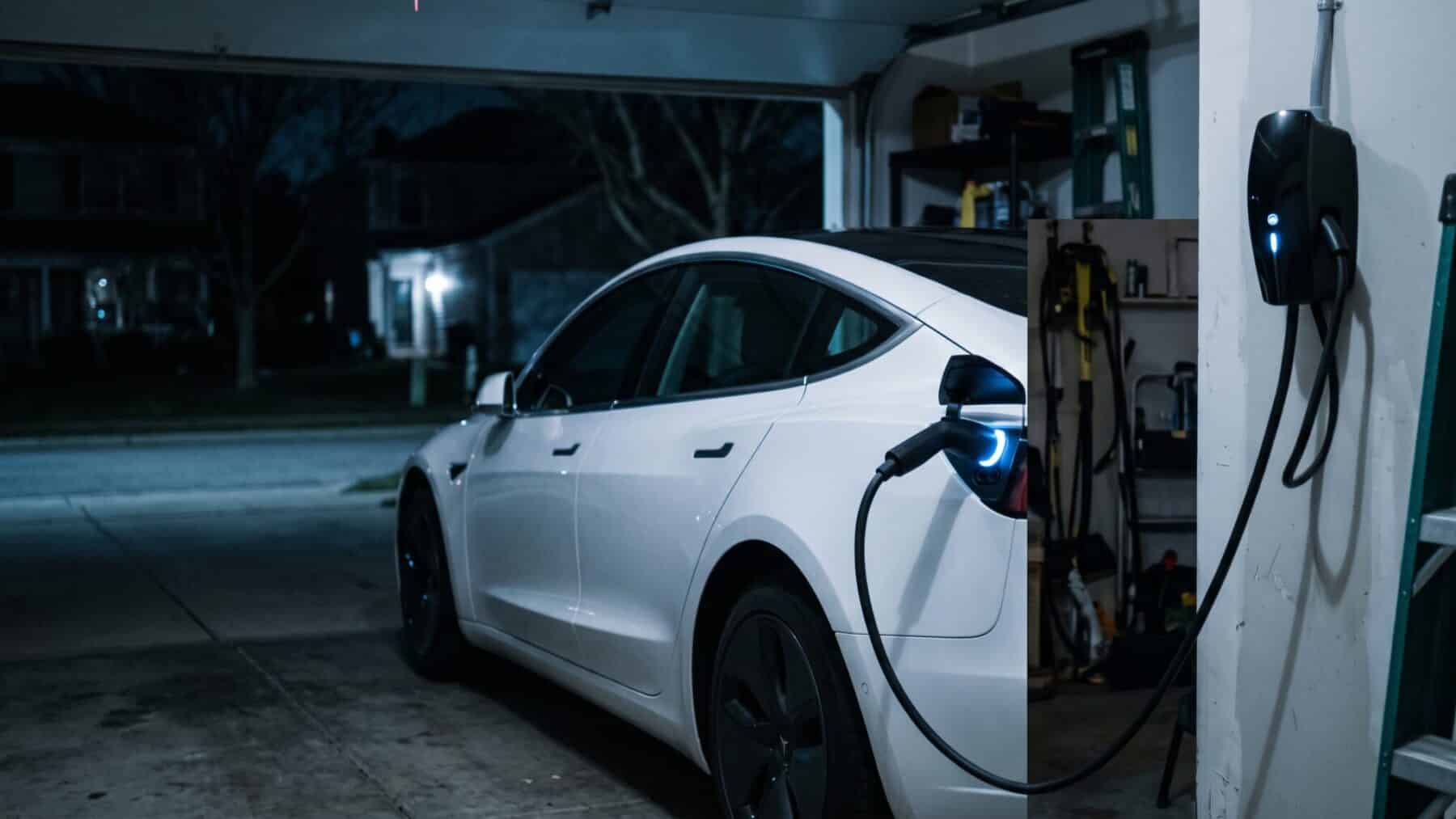
San Diego Gas & Electric has put some of the sharpest price signals in the country on residential EV charging. The utility’s revised EV-TOU-5 plan, effective August 1, 2026, prices super-off-peak electricity at 13.1 cents per kilowatt-hour and on-peak power at 80.2 cents per kilowatt-hour.
That is roughly a sixfold gap between charging overnight and charging between 4 p.m. and 9 p.m. The restructured tariff carries one of the widest time-of-use price spreads among investor-owned utilities and is explicitly designed to redirect EV load away from the hours the grid strains the most.
What the rate structure covers
SDG&E published a new EV-TOU-5 schedule effective August 1, 2026, and the rates apply to bundled, non-CCA residential customers. The tariff is designed for households with qualifying electric vehicles and places an unusually strong incentive on overnight charging.
The overnight window runs about six times cheaper than the 4 p.m., 9 p.m. peak. Super-off-peak hours are not limited to overnight: weekdays include a midday window from 10 a.m. to 2 p.m., and weekends run from midnight straight through to 2 p.m.
That midday window is particularly relevant as rooftop solar generation typically peaks at the same time, meaning cheap off-peak charging and surplus solar supply can align.
Why the price signal matters for the grid
The rate revision arrives as utilities across the country are under pressure to manage the load that comes with rapidly expanding EV adoption. Home charging pushes demand directly onto local distribution circuits that were never designed for it. A single EV battery can be 75 kilowatt-hours or more, meaning recharging it in a few hours can draw seven to ten times the load of a typical household.
According to the EIA’s Annual Energy Outlook 2026, data center load is emerging as the dominant driver of long-term U.S. electricity growth. After a decade-plus plateau, national electricity demand has risen 2.1% annually over the past five years and is projected to grow at an average annual rate of 0.9% to 1.6% per year through 2050 across modeled cases. The ratio of average system load to peak load, known as the load factor, affects how system costs such as reliability and distribution are incorporated into customer rates.
Time-of-use pricing that flattens that ratio by moving EV charging off peak is one of the principal tools regulators and utilities are relying on to manage that dynamic.
SDG&E’s move is also a response to the cost pressures utilities face when peak demand requires expensive incremental capacity. Regulators in other states have been scrutinizing those costs closely: EV drivers in California contributed $2.2 billion more than they cost to serve between 2011 and 2021, according to a study by NRDC and Synapse Energy Economics, even while utilities were planning substantial grid expansion.
Rate design that encourages off-peak charging can sustain or widen that margin by avoiding costly grid reinforcements driven by clustered peak demand. That kind of expenditure has been a recurring flashpoint in recent utility rate proceedings. For context on how regulators have been handling those costs elsewhere, see GCN’s coverage of how investor-owned utilities sought $18.6 billion in rate hikes in the first half of 2026 and what approval rates look like nationally.
Practical implications for EV owners
The DOE’s Office of Electricity has noted that EVs and the grid can have a symbiotic relationship, since EVs have flexibility in when and how long they charge and may sit idle for long periods. Meeting growing EV charging demand will require approaches that take advantage of both demand and supply flexibility.
SDG&E’s new tariff is a direct commercial implementation of that principle: owners of smart chargers or vehicles with scheduled charging can program overnight start times and capture the full rate benefit automatically.
Existing SDG&E residential customers can switch to EV-TOU-5 through their online account. The utility advises customers to confirm current terms directly with SDG&E before enrolling, as the August 1 schedule supersedes an earlier April 2026 revision to the same tariff.
Broader pricing trends
San Diego’s on-peak rate of 80.2 cents per kilowatt-hour is notably high compared with national averages. SDG&E residential rates climbed 4.5% to 9.7% during 2025, depending on billing structure, reflecting California’s transmission and distribution cost base as much as peak demand management strategy.
That underlying cost pressure has been documented in recent rate proceedings: a $275 million distribution rate hike in eastern Pennsylvania that took effect this July illustrated how grid investment driven partly by electrification load is flowing through to retail tariffs across the country.
Despite requiring substantial distribution infrastructure investment, electric vehicle charging can create net downward pressure on utility rates through improved asset utilization. SDG&E’s 6-to-1 price ratio is, in effect, a utility’s most direct bet that financial incentives alone can shift enough load to make that math work.
