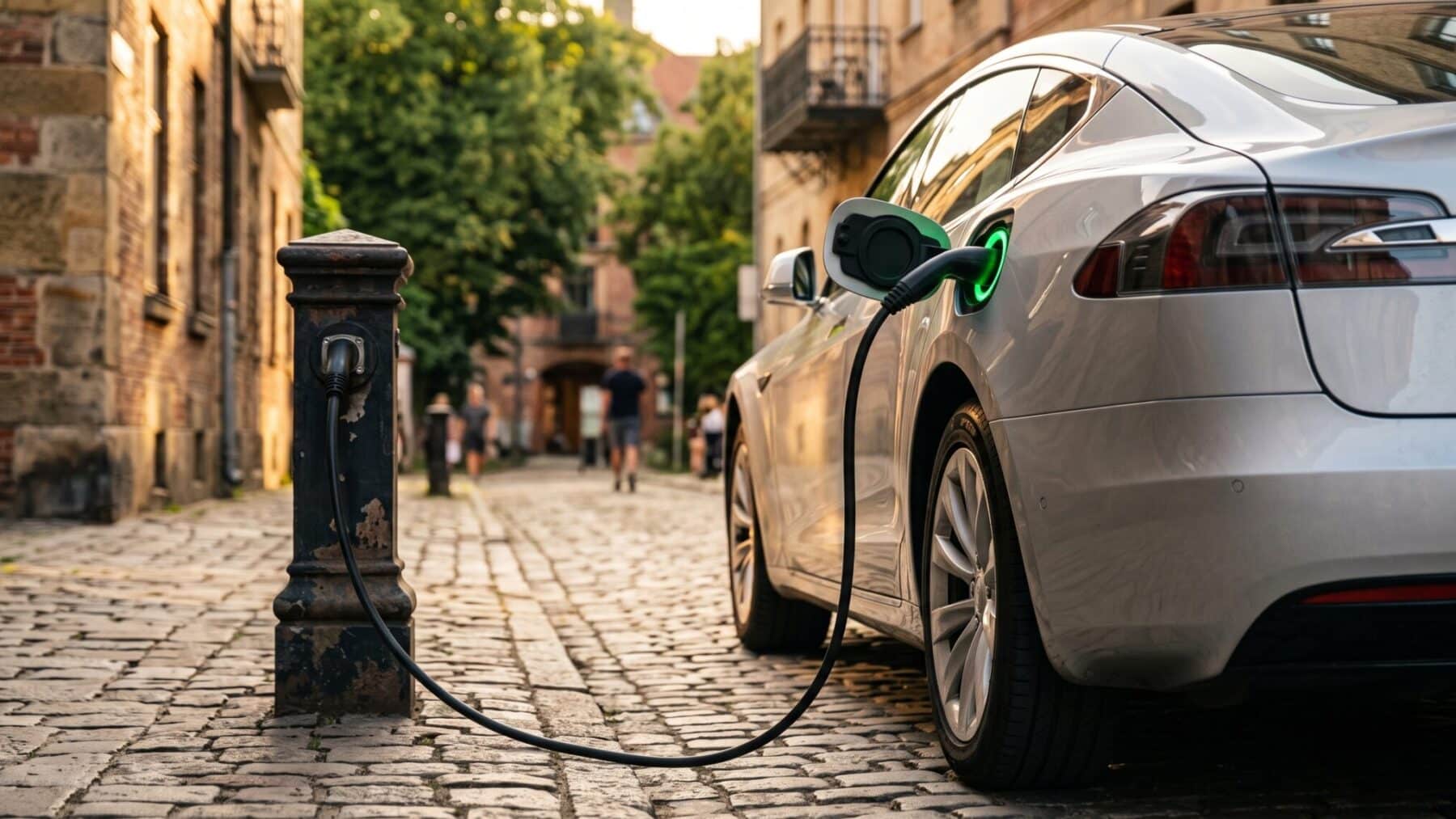
General Motors is standardizing its electric vehicle fleet on the North American Charging Standard, with all 12 models across the Cadillac, Chevrolet, and GMC brands expected to carry a native NACS charging port as standard from the 2027 model year. All electric vehicles currently sold by GM under the Cadillac, Chevrolet, and GMC brands can charge at compatible NACS plugs, either with an adapter or a native port; GM is in the process of moving all EVs to native NACS charging ports for the 2027 model year, meaning an adapter will not be required to charge at NACS ports on all 2027 GM models. The move is confirmed on the official GM newsroom.
What changes for 2027
GM is putting NACS DC fast-charging ports on its entire 2027 model-year EV lineup. Every 2027 GM EV from Chevrolet, Cadillac, and GMC will come with a native North American Charging Standard (NACS) port, also known as SAE J3400 , meaning drivers will be able to plug directly into compatible Tesla Superchargers and other NACS fast chargers.
For the 2027 model year, NACS will come standard on the Cadillac Escalade IQ, Cadillac Escalade IQL, Cadillac Lyriq, Cadillac Optiq, Cadillac Vistiq, Chevrolet Bolt EV, Chevrolet Blazer EV, Chevrolet Equinox EV, Chevrolet Silverado EV, GMC Hummer EV Pickup, GMC Hummer EV SUV, and GMC Sierra EV.
That enables direct access to compatible Tesla Supercharger stations across North America, although some Supercharger locations remain limited to Tesla vehicles.
The 2026 CCS-equipped lineup spans a wide range of EPA- or GM-estimated range figures, from the Cadillac Vistiq at 305 miles to the Chevrolet Silverado EV at up to 478 miles on a full charge. For 2027, what changes is the charging hardware itself.
Where the transition stands today
Two 2026 models are already NACS-native: the Cadillac Optiq and the Chevrolet Bolt. The reborn Chevrolet Bolt arrives in 2026 as a 2027 model. Most 2026 GM models retain a Combined Charging System (CCS) port and charge at NACS fast chargers using an adapter.
Most 2026 GM electric vehicles still use the CCS1 connector, meaning owners need GM’s NACS DC adapter to access compatible Tesla Superchargers and other NACS fast chargers. GM sells that adapter for $275.
When drivers buy a 2027 GM EV with a native NACS port, they will need a different adapter to use fast chargers with CCS1 ports, and a J1772 adapter for most existing Level 2 chargers, including many home charging units. GM sells its J1772 AC adapter for $67.
GM first outlined its transition to NACS in 2023 after reaching an agreement with Tesla, then in 2024 updated those plans to make 2026 the first model year for GM EVs to get a native NACS port. The first GM model to deliver on that commitment was the 2026 Cadillac Optiq.
Charging convenience as a competitive lever
Tesla’s Supercharger share of new US fast-charger installations has slipped as rival networks have expanded, meaning GM owners with native NACS ports will benefit from a growing variety of stations, not just Tesla’s.
GM’s new Energy Pass, built into the MyChevrolet, MyCadillac, and MyGMC apps, combines registration and payment for multiple charging networks. Tesla Supercharger, IONNA, Electrify America, and ChargePoint are supported today, with EVgo coming soon.
Plug & Charge is currently available at IONNA Rechargeries and EVgo locations. GM plans to expand the feature to ChargePoint stations. For vehicles equipped with a native NACS port, Plug & Charge functionality will also be available at Tesla Supercharger locations; an over-the-air software update arriving later this year will enable that capability for NACS-equipped vehicles already on the road.
For 2027 GMC Sierra EV buyers, the factory-installed NACS inlet simplifies charging by eliminating the need for an adapter at compatible NACS stations while preserving access to CCS infrastructure through an optional GM adapter.
What buyers should know now
Buyers considering a GM electric vehicle should be aware that 2027 models will offer direct access to Tesla Superchargers and other NACS fast chargers, while most 2026 models will still require an adapter. Keeping a CCS1 adapter on hand will remain useful for 2027 owners accessing CCS fast chargers, and a J1772 adapter for a wider range of Level 2 stations.
Prospective GM EV owners may want to factor in these charging options when deciding between a 2026 or 2027 model.
The shift also has implications for those considering the used market. As native NACS becomes a universal GM feature, the already-elevated used vehicle costs could be influenced further by buyers placing a premium on adapter-free charging convenience in newer model years.
GM has not announced pricing changes tied to the port upgrade, and the company expects the full 2027 rollout to proceed on its current timeline.
