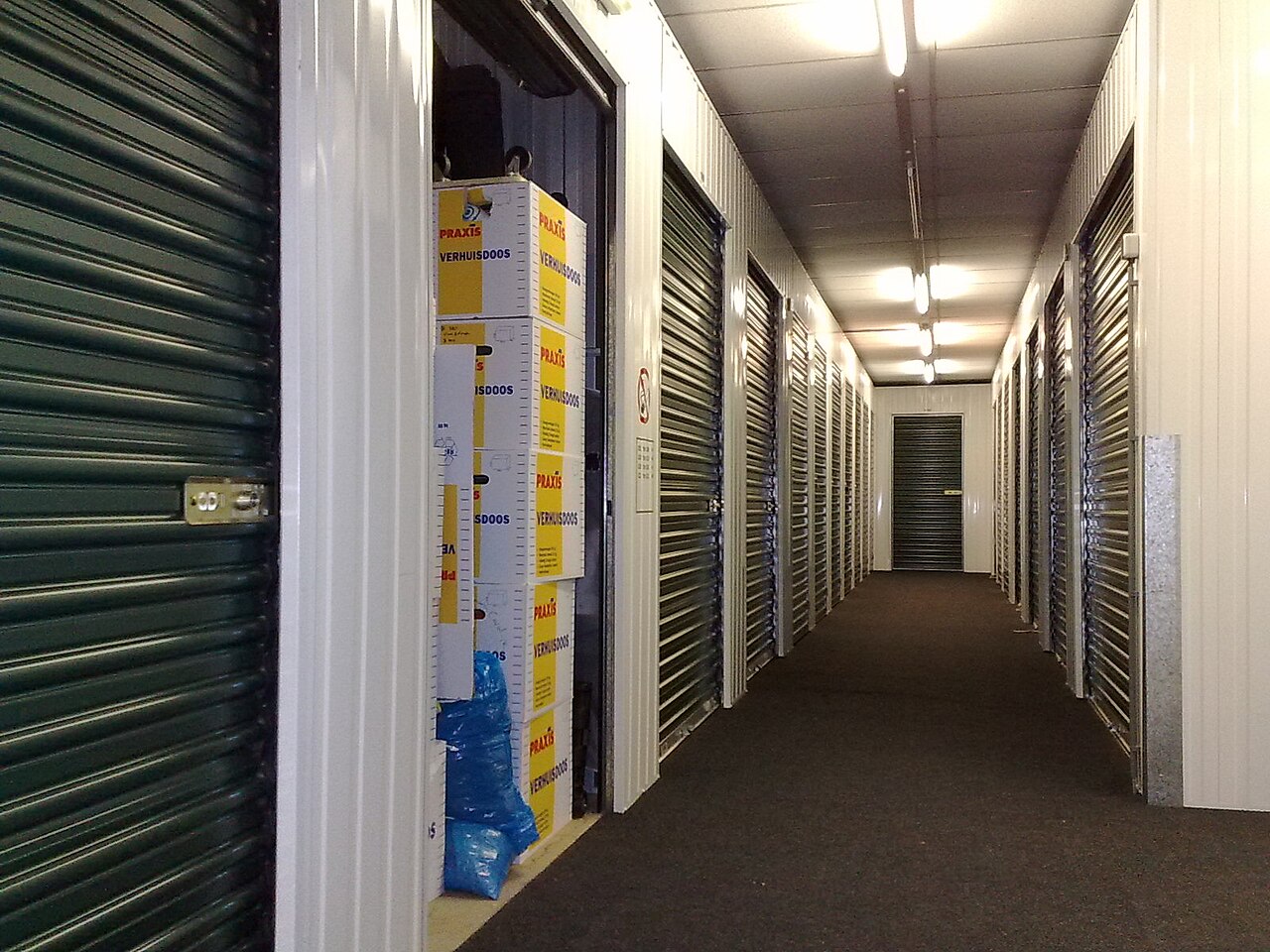
A roll up door lifts with a metallic groan, revealing a stack of boxes nobody has touched in three years.
Behind them sits a couch, a crib, a dead relative’s dining set.
The renter checks the time, snaps a photo for no one, and locks the door again.
She will pay for this room again next month.
So will tens of millions of other Americans.
What turns a spare room full of boxes into a permanent monthly bill?
Why a locked metal box became a recurring expense for life’s biggest transitions
The mechanism is simpler than it looks: storage facilities do not sell space, they sell a pause button on hard decisions. A move, a breakup, a death in the family, or a downsizing all dump more belongings into a household than its closets can hold, and a month to month lease feels painless next to the alternative of deciding what to keep.
That pause rarely ends on schedule. Once a couch or a parent’s china cabinet sits behind a locked door, the emotional weight of giving it away only grows, so the short term rental quietly turns into a standing bill that outlives the crisis that started it.
Self-storage demand has historically been driven by the “Four Ds”: death, divorce, downsizing, and dislocation, life events that generate approximately 50% of all storage rentals, with another 33% attributable to space constraints. Each one hands a household more stuff than it has rooms.
So a storage unit becomes the easiest way to defer the sorting nobody wants to do right now.
Inside the business now worth tens of billions a year
Walk any American commercial strip and the rows of identical doors are easy to miss, yet they add up to a genuinely massive footprint. According to the Self Storage Association, the United States has approximately 64,000 self-storage facilities, far more storage space per person than most other countries. A recent industry review on this trend can be found here.
That scale shows up directly in the receipts. The self-storage industry generated almost $24.2 billion in revenue in 2025. That total is collected in modest monthly installments from ordinary renters rather than big corporate accounts.
And the space keeps expanding to match demand. Multiple industry trackers put total rentable self storage area at close to two billion square feet nationwide, a scale that dwarfs what most other countries build for the same purpose per person.
None of that money buys anything new, a pattern not unlike how America’s surplus parking sits mostly idle while still costing somebody money every day.
What the receipts and renter surveys actually show
Local reporting on the trend, published this week, pulled directly from Self Storage Association figures and company disclosures rather than estimates from marketing blogs. That matters because the industry’s own math is unusually transparent about what renters pay versus what new tenants sign up for.
The same report notes that rate comparisons can mislead: according to Extra Space Storage’s 2025 annual report, new leases at its established facilities averaged $13.16 per square foot annually, compared with $19.91 per occupied square foot across all renters (after discounts and bad debt) . That gap does not mean existing tenants saw their bills jump by the same margin, since landlords often set a higher sticker price for newcomers while existing renters drift upward more slowly at renewal. Separately, Public Storage’s 2025 annual report acknowledges offering promotional discounts, including first-month rentals for as little as $1, but adds that it typically increases rental rates for long-term customers every six to 12 months .
Even so, a typical unit still runs somewhere between roughly 100 and 165 dollars a month depending on size, location and climate control, with larger or climate controlled units pushing past that range in expensive markets.
That persistence is the real finding buried in the numbers. The industry runs on inertia and avoidance, on households that intended a temporary arrangement and never got around to ending it.
Where this pattern breaks down and who actually walks away
The habit is not universal, and plenty of renters do use units exactly as intended, cycling furniture through during a move or storing seasonal gear for a few months before clearing out. For them the monthly fee is a fair trade for convenience, not a sunk cost.
But the broader renter population looks different in survey after survey, with a sizable share admitting they rarely return once the initial crisis that prompted the rental has passed. That gap between intention and behavior is where the industry’s steady growth actually comes from.
Even so, the same impulse shows up at home in smaller form, in the kitchen drawer nobody can close or the closet shelf nobody can see the back of. A smaller version of the same decision deferred rather than made.
Which is also why so many people quietly accept the bill rather than deal with the contents. Sorting through a parent’s belongings or a failed relationship’s shared furniture is emotionally harder than writing a monthly check, so the check keeps getting written, much like how households quietly carry other discretionary costs long past their original purpose.
What it means for households weighing whether to finally clear the unit
None of this makes storage units a bad product. For the right short window, during a cross country move or a home renovation, they solve a real and temporary problem efficiently compared to the alternatives.
The open question is how long that window should reasonably stay open before a household admits the arrangement has become permanent rather than temporary. Household budgeting advice increasingly flags recurring storage fees as a line item on autopay that families rarely revisit.
So the next time that metal door rolls up, the honest question is not what is inside, but whether the thing being paid for is really the furniture or simply more time to decide.
That is not a verdict on anyone’s character. It is simply what tens of billions of dollars in receipts look like when added up, one quiet monthly payment at a time.
